Software for training speech and singing intonation — see the melody, compare it to a reference, and practise with instant feedback.
Personalized. Friendly. Quality training.
This site hosts free, open-source tools that give a numerical and visual
assessment of the prosodic characteristics of singing and speech.
New Speech Rate Meter 2
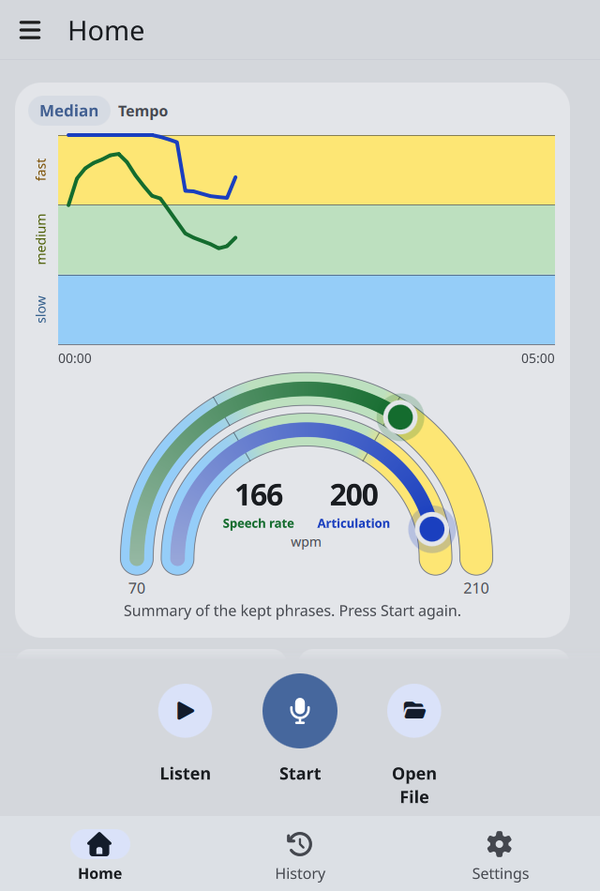
See how fast you speak with live estimates of speech rate, articulation, and pauses.
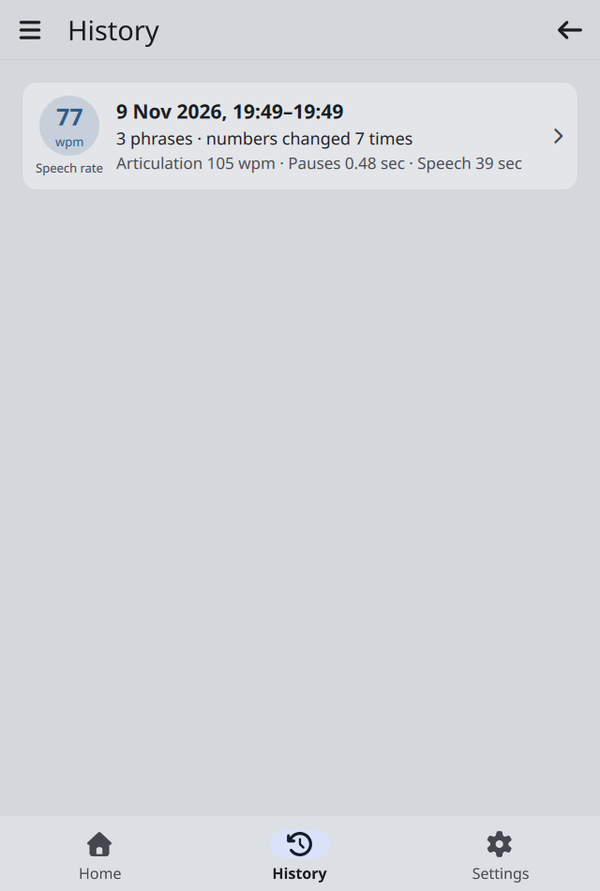
Review session history and charts, or analyze a WAV recording — all processing happens on your device.
Available for Windows and Linux, and on Google Play for Android.
Speech Auto Tuner (SAT)
— automatic adjustment to normalize the acoustic characteristics of a microphone signal during the creation of speech audio content
Speech Intonation Assistant (SIA)
— analyzer of the statistical characteristics of the user's speech intonation parameters at fairly long intervals
Windows and Linux builds, user guides, and source code for each tool. The latest release is Speech Rate Meter 2 — desktop and Android on Google Play.
New Speech Rate Meter 2 (SRM2)
Speech Rate Meter 2 measures speaking tempo on Windows, Linux, and Android.
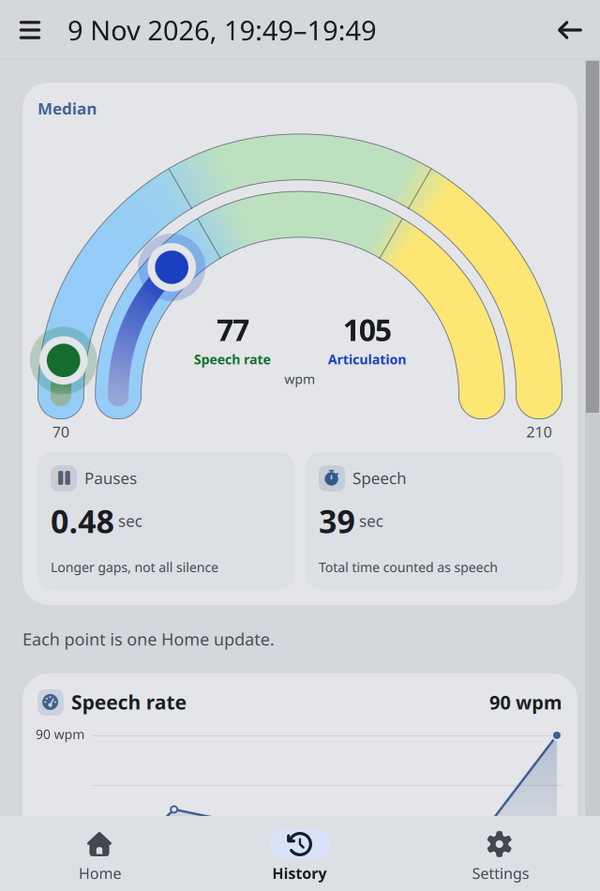
A live gauge and charts show estimated speech rate and articulation rate in words per minute,
along with pause length and total speech time. Tempo is estimated from vowel-like intensity peaks,
without recognizing words or using a speech-recognition model.
Record a session with automatic speech detection, review saved results and charts in History,
or open a WAV file for analysis. Designed for speakers, announcers, call-center operators,
language learners, and clinicians, with English and Russian interfaces and user guides.
All processing is local; microphone recordings are deleted when you leave the app unless
Keep recording files is enabled. Requires Android 8 or later on mobile.
Tempo chart and pace gaugesSaved session historySession summary and analysis
Chinese Speech Intonation Trainer 2 (IntonTrainer 2.0)
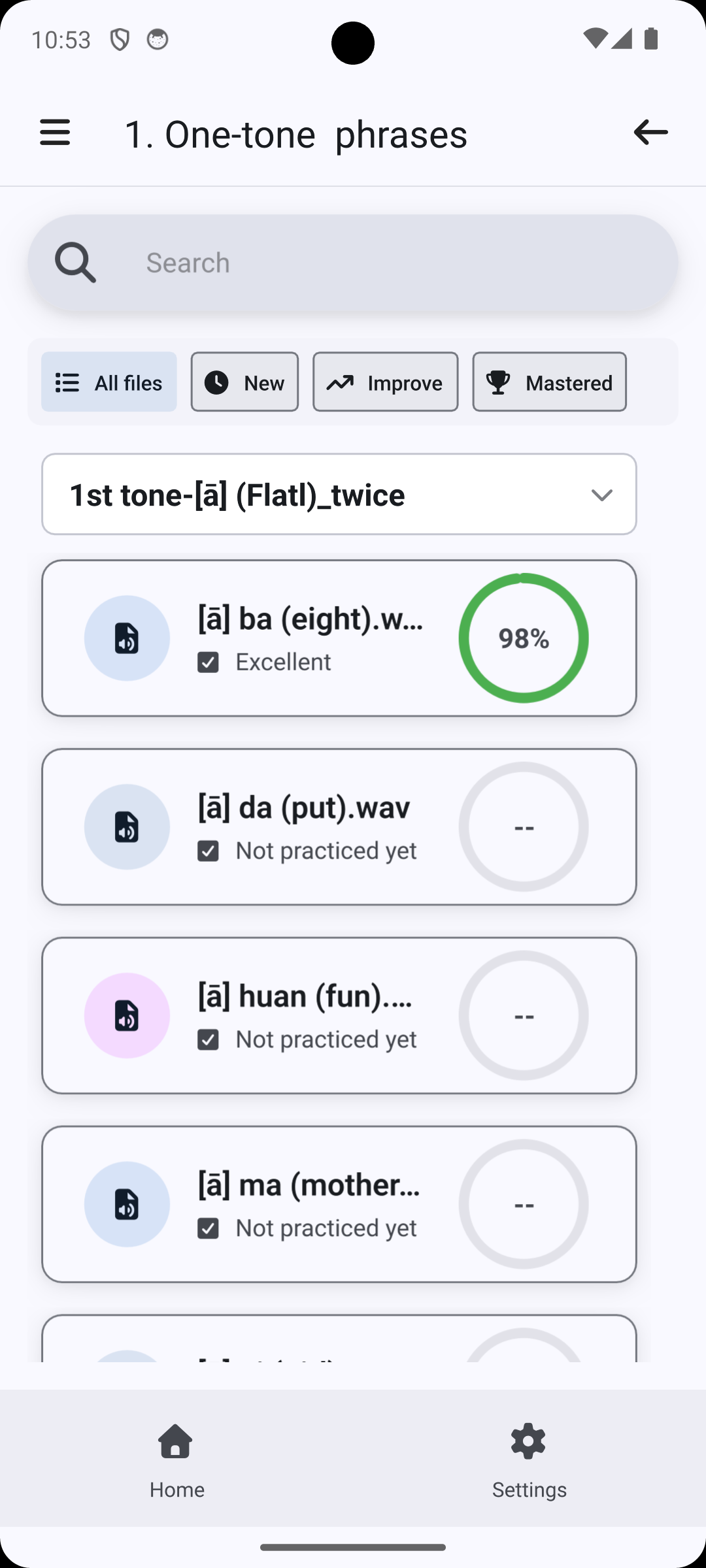
IntonTrainer 2.0 is a cross-platform desktop application for learning
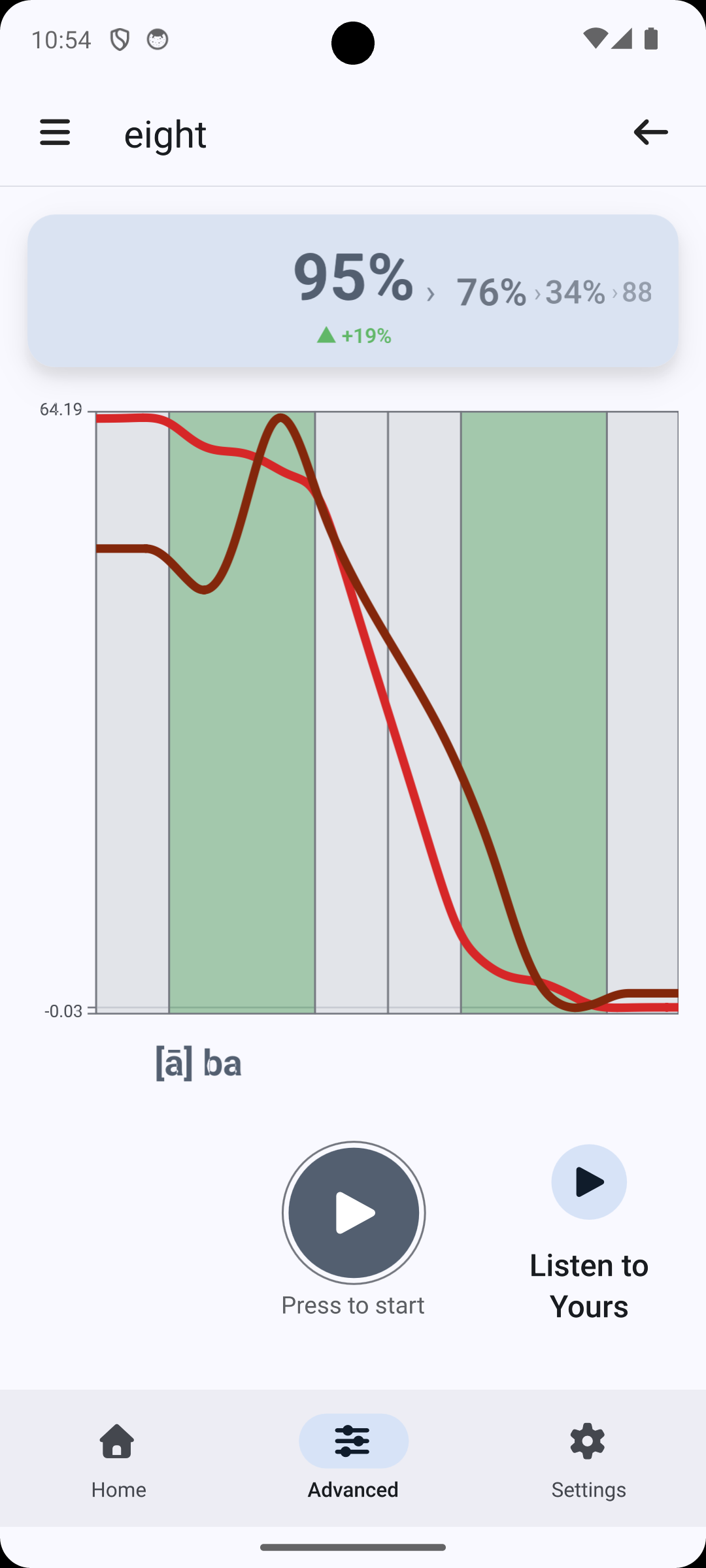
and improving Chinese speech intonation. It records your voice, compares your pitch contour
against a native-speaker reference using Constrained Dynamic Time Warping (CDTW), and gives
an instant similarity score (0–100%) with a Unified Melodic Profile (UMP).
Training can run hands-free with automatic voice-activity detection, or as a guided
Play & Listen cycle. You get a live waveform while you speak, a trend of recent scores,
and an optional advanced analysis view (pitch, spectrogram, DTW alignment). Built for
language learners, phonetics students, speech therapists, and researchers.
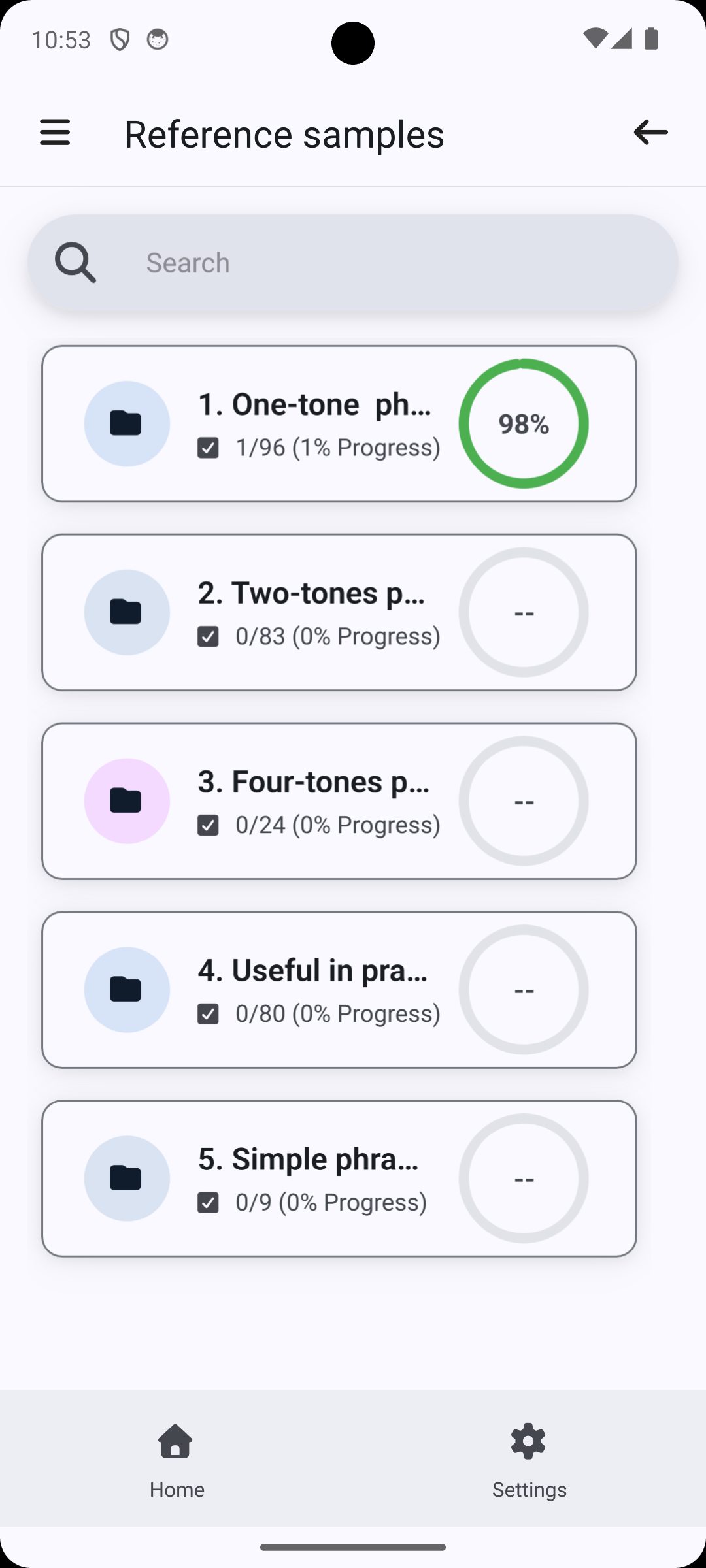
Reference categories and progressChinese phrases to practiseMelody comparison and similarity score
The system compares the melodic (tonal) portraits of a reference phrase and a phrase spoken by the learner, with active learner–system interaction.
The main algorithms used for analyzing and comparing intonation features are described in the papers and the advanced user guide.
A set of reference sentences represents the basic intonation patterns of English speech and their main varieties.
A current linguistic idea is that a foreign accent is more evident and stable in intonation than in segmental sounds.
IntonTrainer 2.0 uses the same comparison of unified melodic portraits, with an updated interface, automatic recording, and instant similarity scoring. See the Chinese 2.0 download (desktop and Android on Google Play) and the project on GitHub.